It is just past two. An hour ago you could see the whole valley. Now you can see your ski tips and about ten metres beyond them. The wind has turned, the snow is moving sideways, and the track behind you is already gone.
This is where many people make the mistake. They keep going. A bit further, just over the next ridge. But walking into the wind in poor visibility costs energy, and energy is what you need to stay warm.
The ninth rule of the Norwegian mountain code, from the Norwegian Trekking Association and the Red Cross, is short: save your energy and seek shelter if necessary. The point is the order. You seek shelter while you still have the strength to build it.
The whole night in one minute
The film shows the full sequence, from the storm arriving to lying in the cave.
First: find the right drift
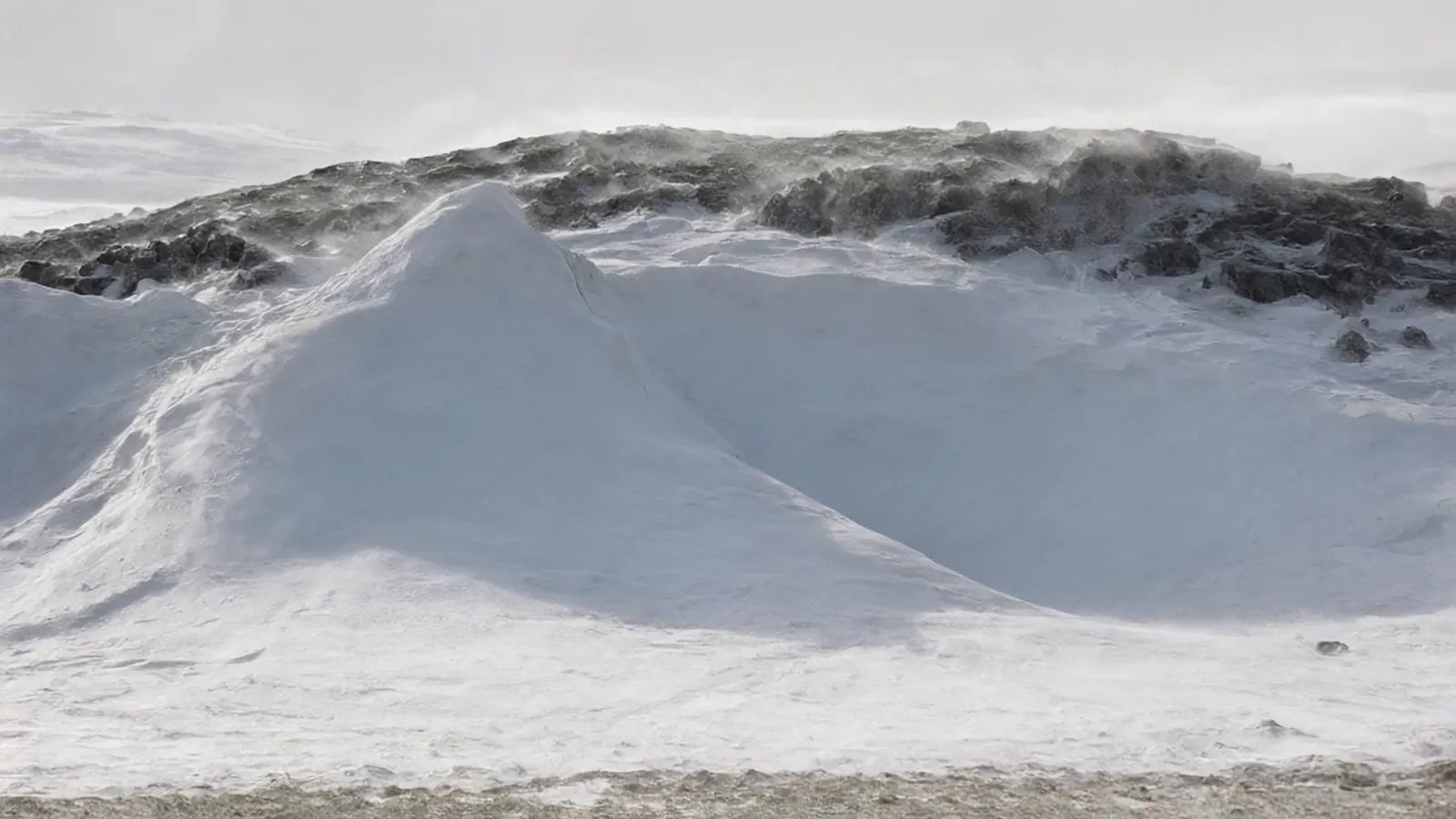
A snow cave is dug into a drift, snow the wind has piled up on the sheltered side of a ridge or an edge. The Norwegian encyclopedia Store norske leksikon considers a drift of four to five metres ideal. Higher than that, and the risk of collapse goes up.
Look uphill before you dig. There should be no avalanche terrain above you. Then push a ski pole or a probe into the drift to check that the snow is deep enough.
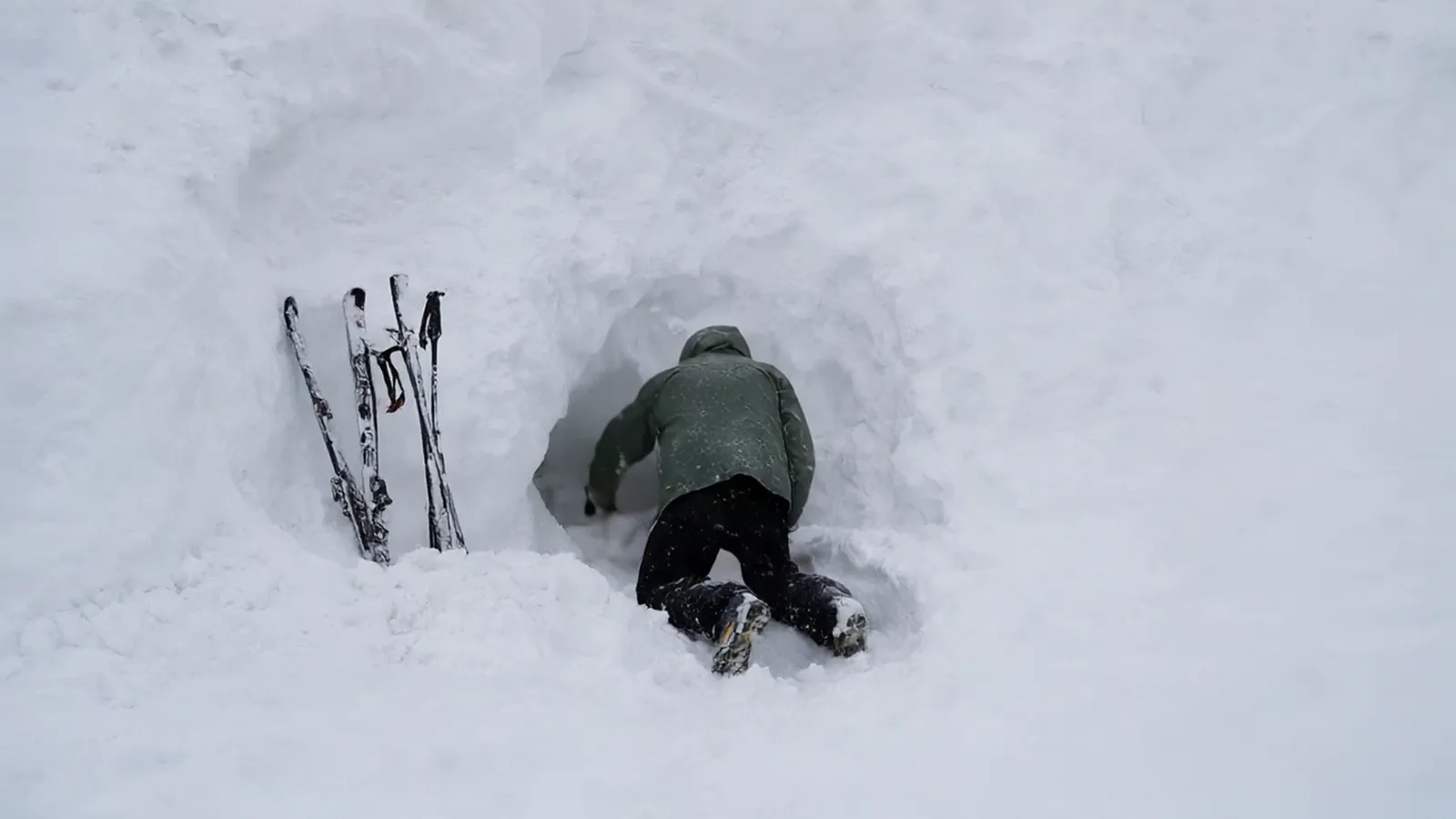
Then: dig in four steps
Digging makes you warm and damp. Take off a layer before you start, keep your hood up, and have dry mittens ready for afterwards.


Inside the cave
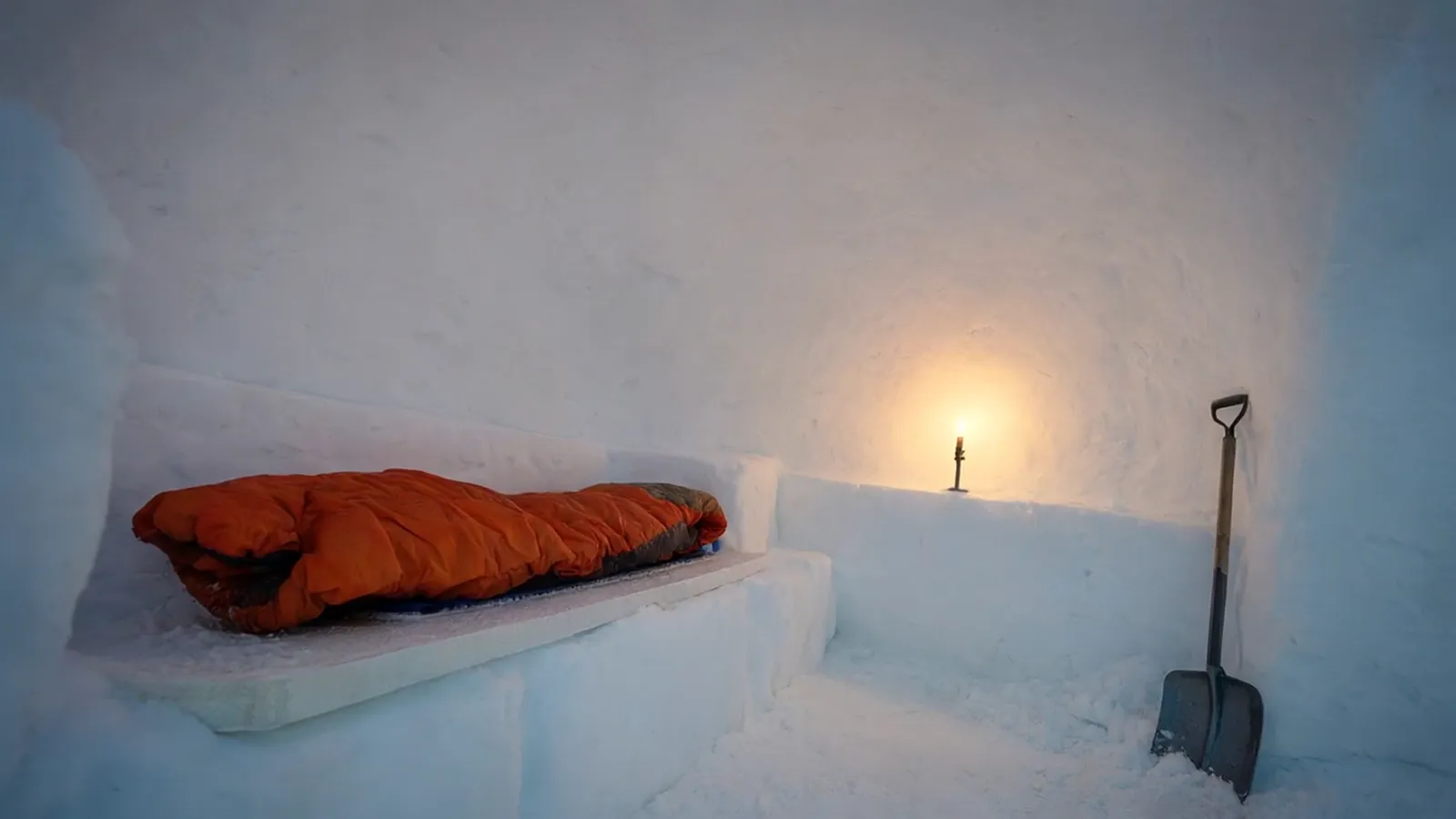
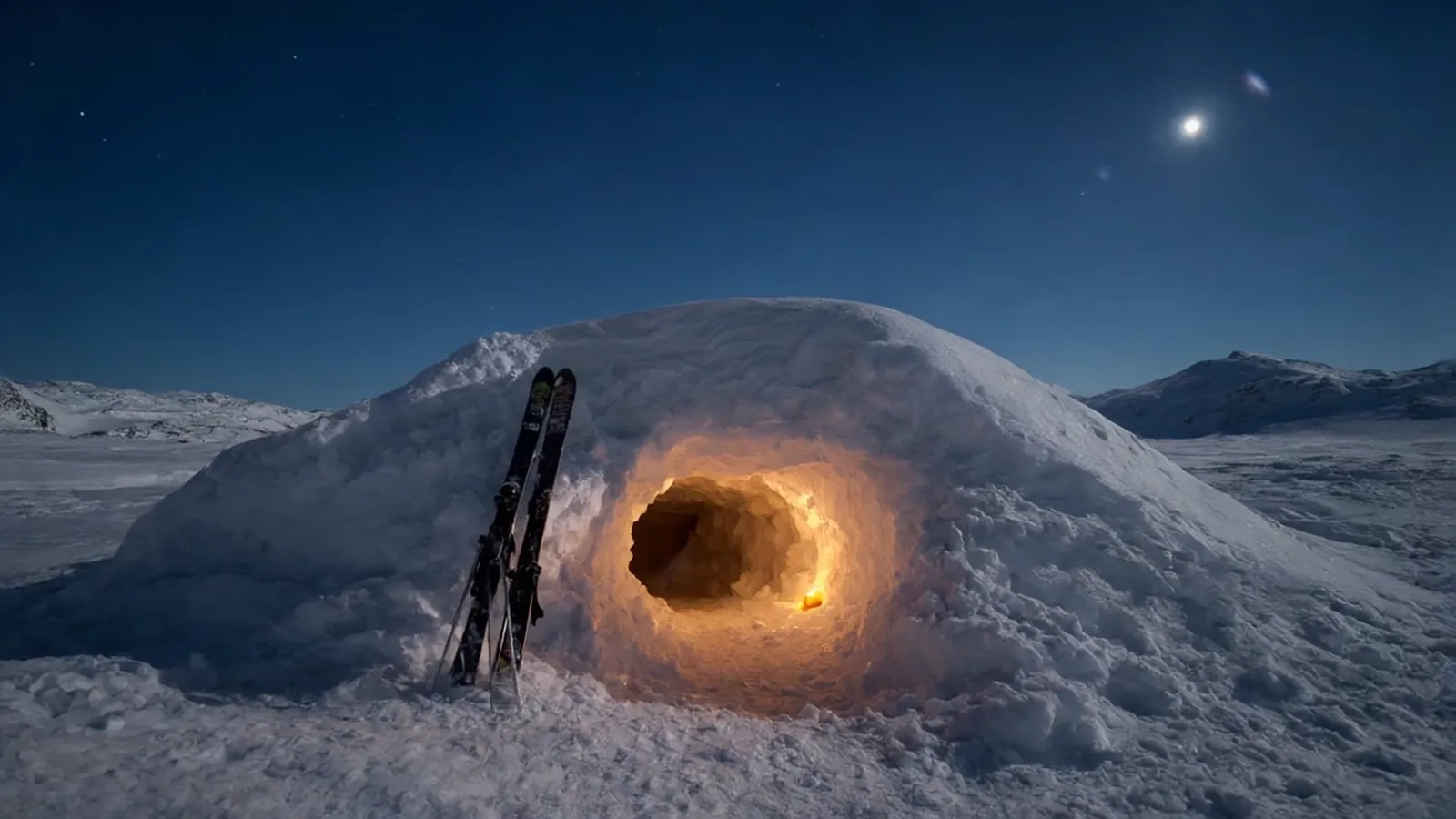
The first thing you notice is the silence. The wind that was shouting outside is now a faint hum. One candle lights the whole room, because the snow throws the light back.
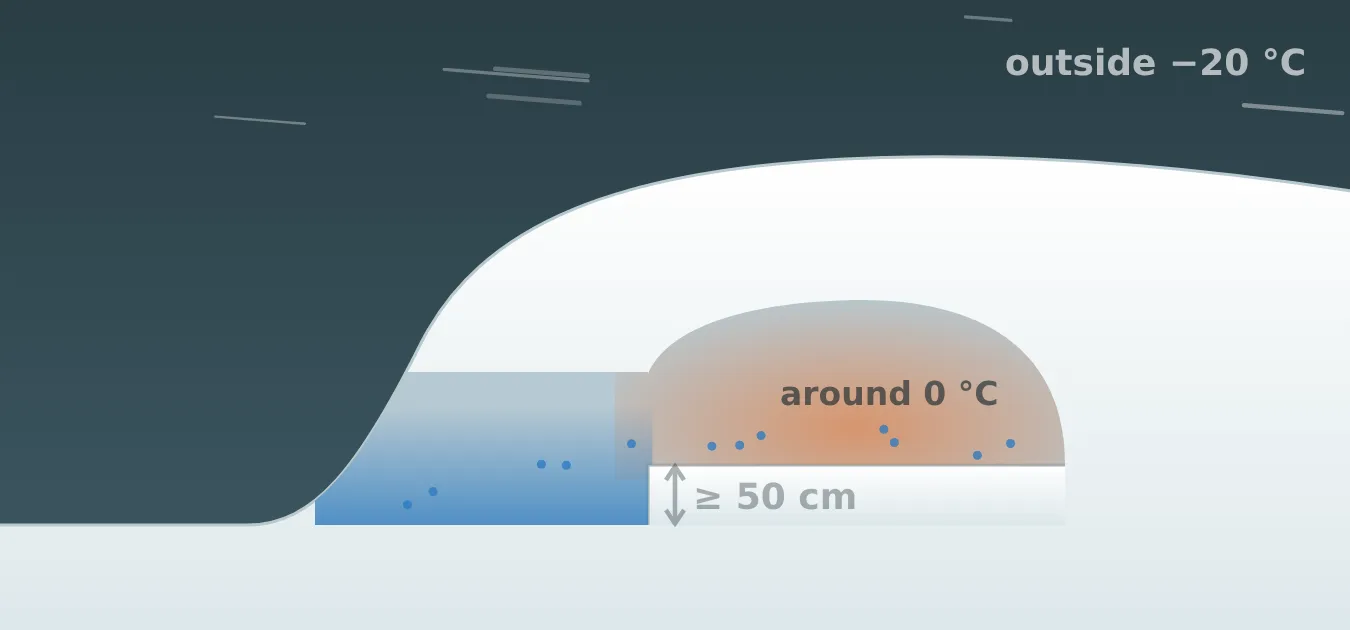
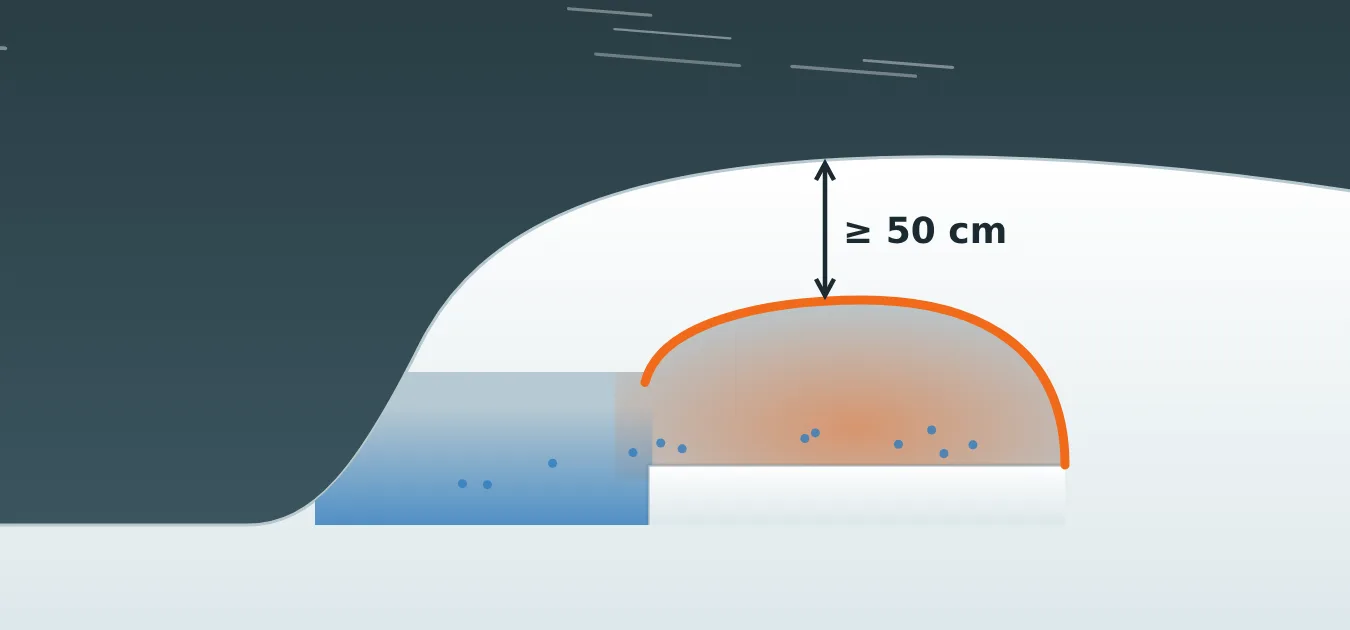
And it is warmer than you expect. Store norske leksikon describes around minus 20 degrees at the outer end of the cold trap and around zero at the top of the cave.
Four things to do before you lie down
- Bring the shovel inside. Drifting snow can close the entrance overnight.
- Plant your skis upright outside. They show others where you are.
- Light a candle, away from the roof and walls. If it burns poorly, there is too little oxygen. Let in more air.
- Check the air hole. It must stay open all night.
Air is the thing to watch
A snow cave is airtight. That is why it is warm, and that is why you must ventilate. Store norske leksikon warns that bad air is dangerous when several people sleep close together, because you do not notice the symptoms while asleep. It recommends a routine for waking each other.
If you use a stove in the cave, you need even more air. SINTEF, the Norwegian building research institute, writes that correct ventilation is critical.
No drift in sight?
On flat ground you can dig a snow trench: about a metre wide, covered with snow blocks. It takes more work than a cave in a drift, but it gets you out of the wind. The principles are the same: sit higher than the bottom, and make sure you have air.
The morning after
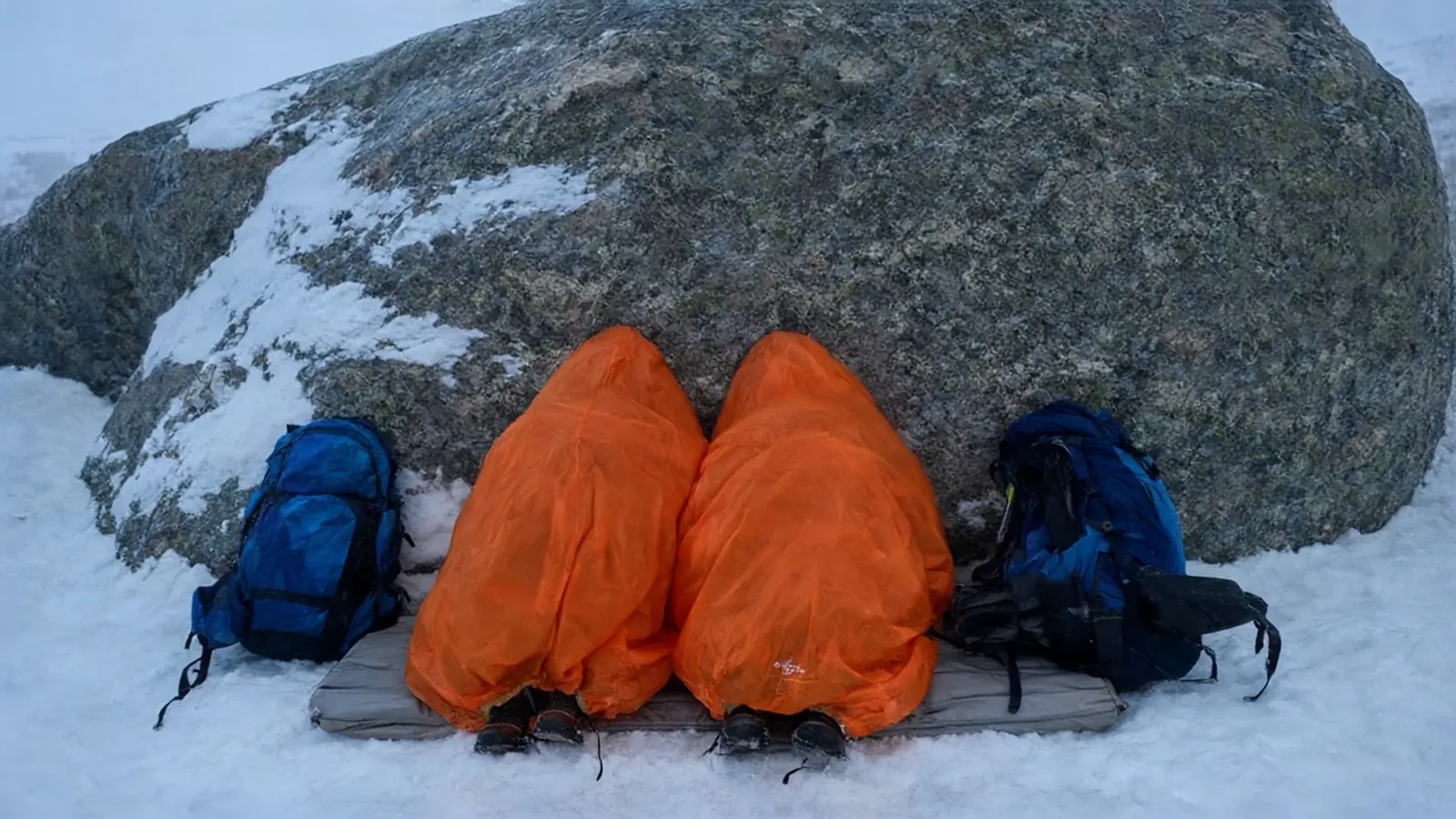
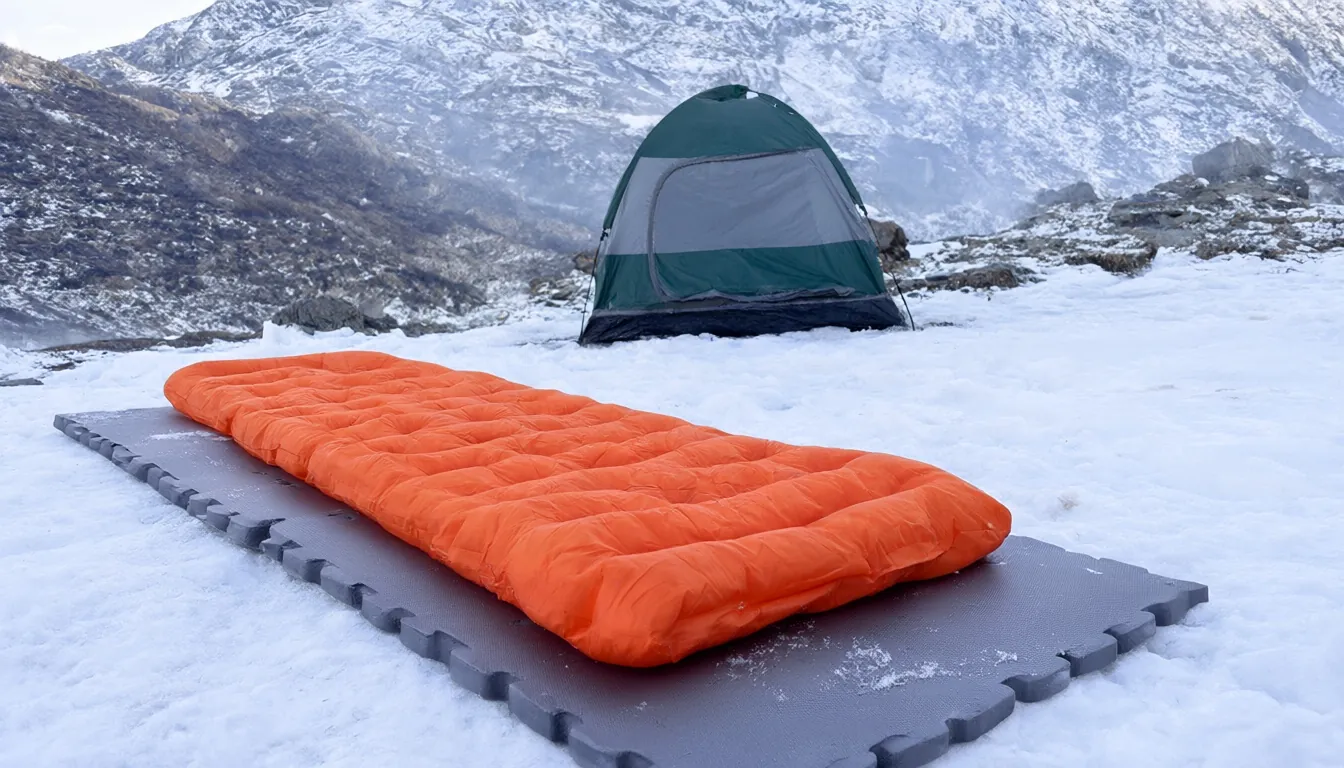
Mountain storms pass. What matters is whether you still have strength and warmth when they do. That is why the shovel goes in the pack on winter trips, together with a wind sack, a sleeping pad and a sleeping bag. The Norwegian Trekking Association and the Red Cross count those four as what you need to get through a night out.
And that is why your first snow cave should be dug on a fine day, with cocoa in the flask and plenty of time. Then your hands know what to do on the day you need it.
In Norway, call 112 if you are in distress and have coverage.
Sources
- Store norske leksikon: Snøhule
- Røde Kors og DNT: Fjellvettreglene
- Villmarksliv: Snøhule på én-to-tre
- SINTEF Byggforsk: Snøhule (S 330.140)
- Norges speiderforbund, Vestmarka: Alternative snøbivuakker
This article gives general advice and does not replace training or experience. Always follow weather and avalanche forecasts. Images and film are AI-generated and do not show a real event.