You should have been back at the car an hour ago. But then one of you rolled an ankle, and the pace dropped by half. Now the light is turning blue, the wind is picking up, and there is still a long way to go.
Most unplanned nights out begin like this. Not with a big drama, but with something small that takes time. The danger is rarely the injury itself. It is the cold that arrives while you wait.
The Norwegian Red Cross has pointed out that help can take a long time to reach you when the weather is bad and the helicopter cannot fly. Until then, keeping warm is up to you.
The whole night in one minute
The film shows what steals your warmth, and what to do about it.
First: stop in time
The Norwegian mountain code says to be prepared for bad weather and cold, even on short trips, and to seek shelter if necessary. The hard part is deciding. Stopping feels like giving up.
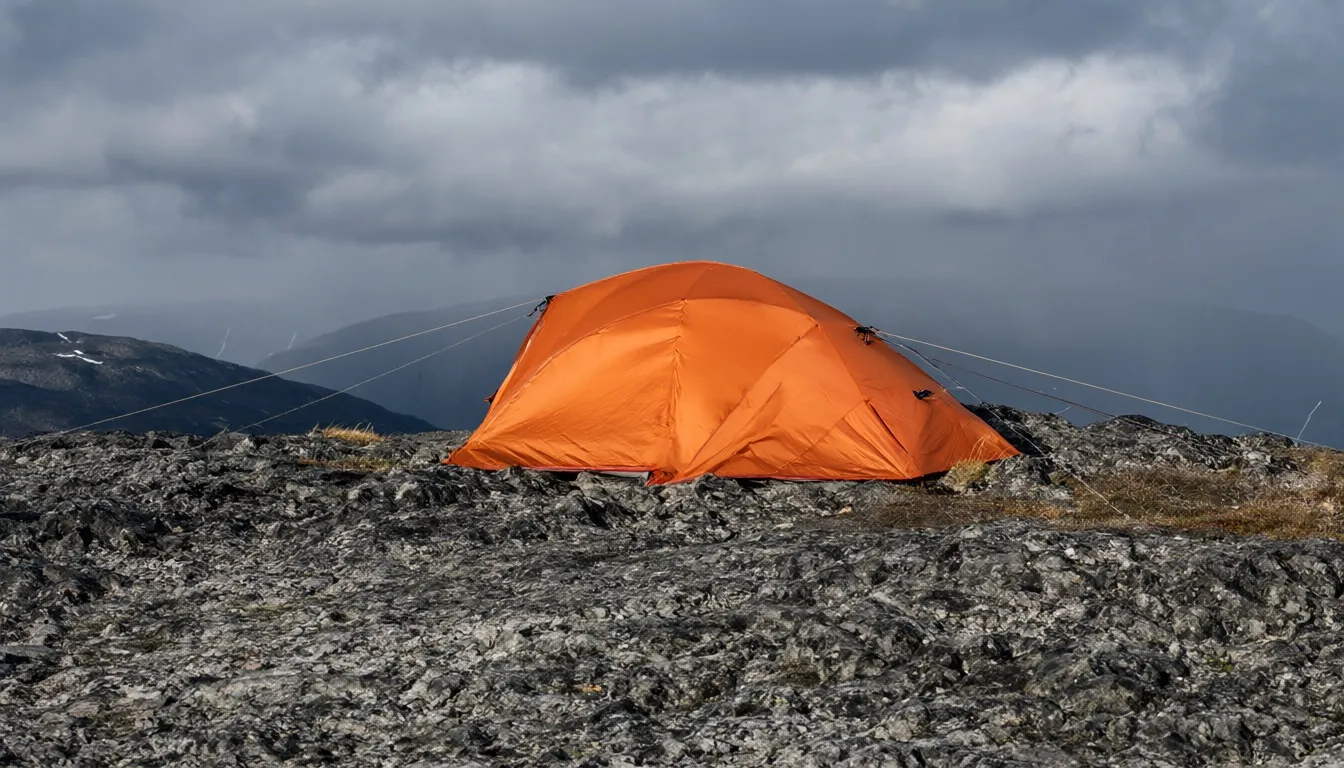
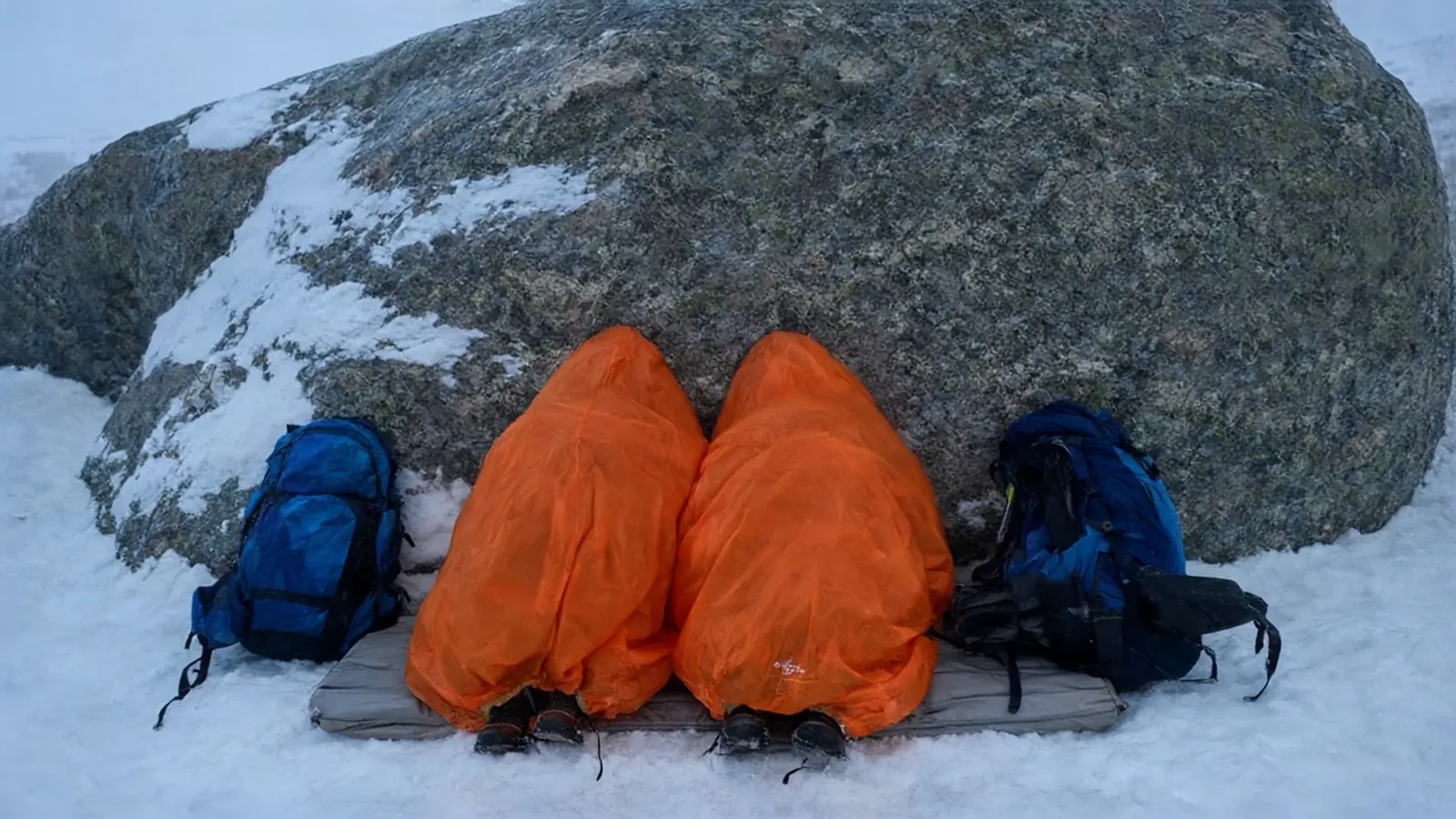
But it is easier to make shelter while your fingers work and your head is clear. Get out of the wind, behind a boulder, a snowdrift or an edge in the terrain.
Then: stop the three heat thieves
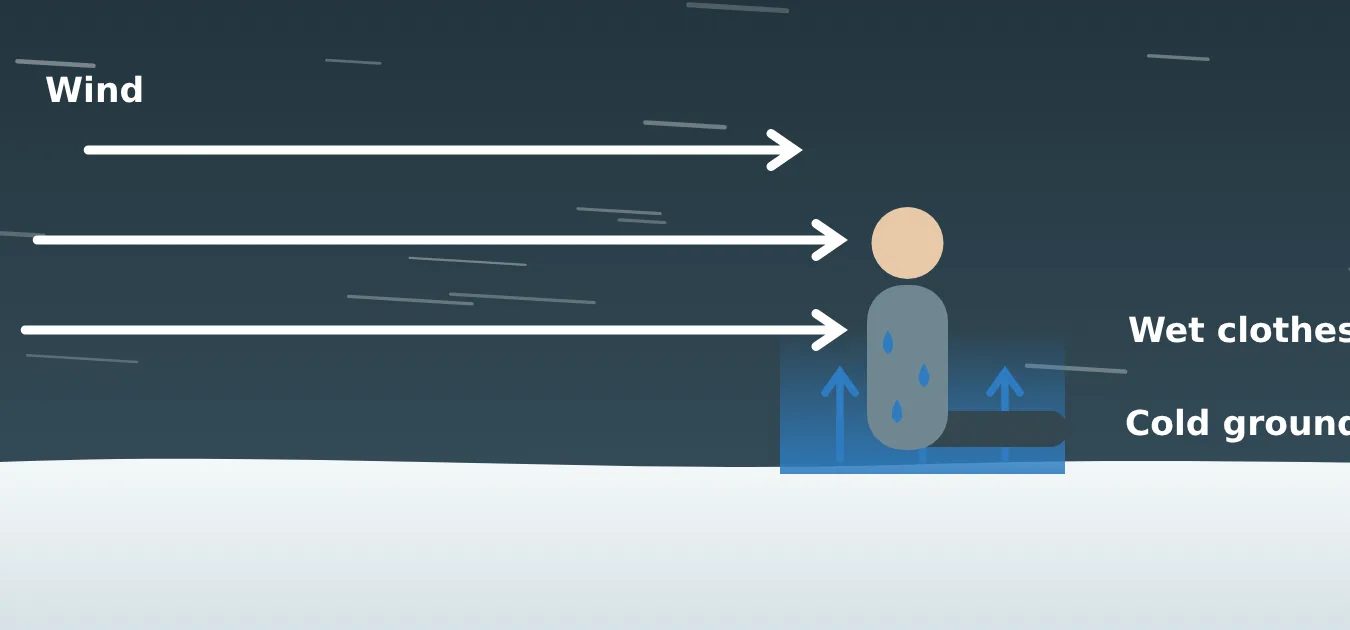
Hypothermia sets in when the body loses more heat than it produces. The Norwegian health reference NHI points out that wind and moisture speed it up. Then there is the ground you sit on.
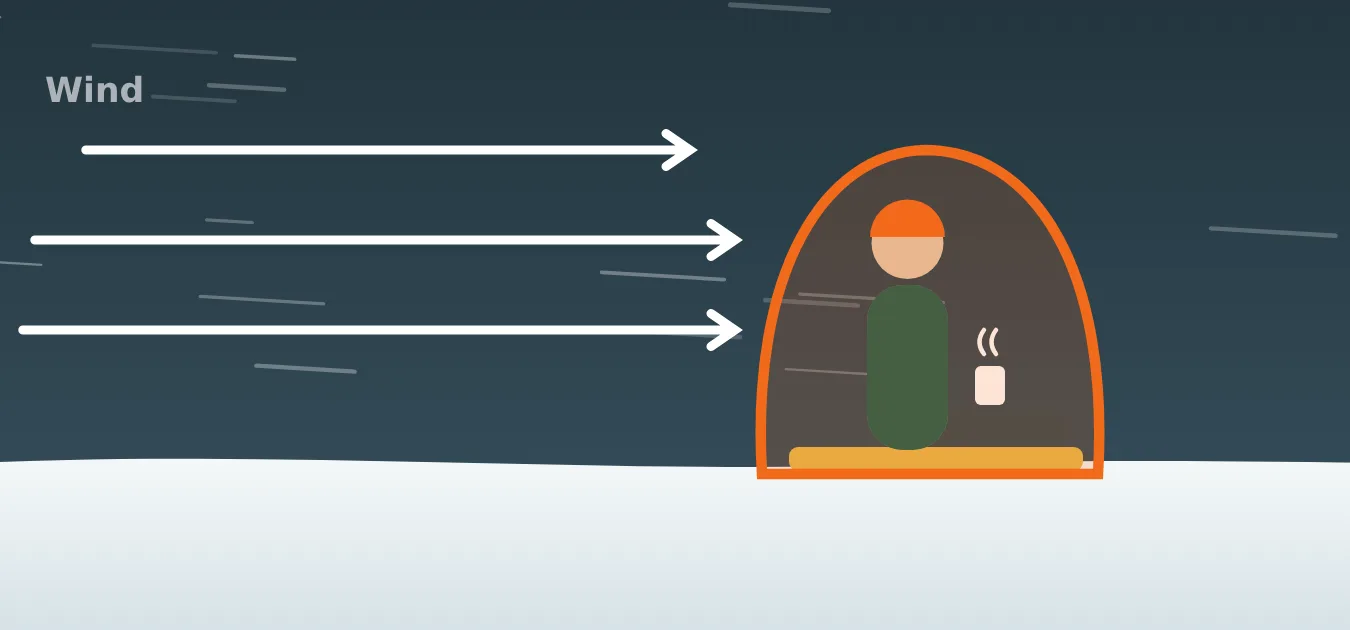
A wind sack is not a sleeping bag
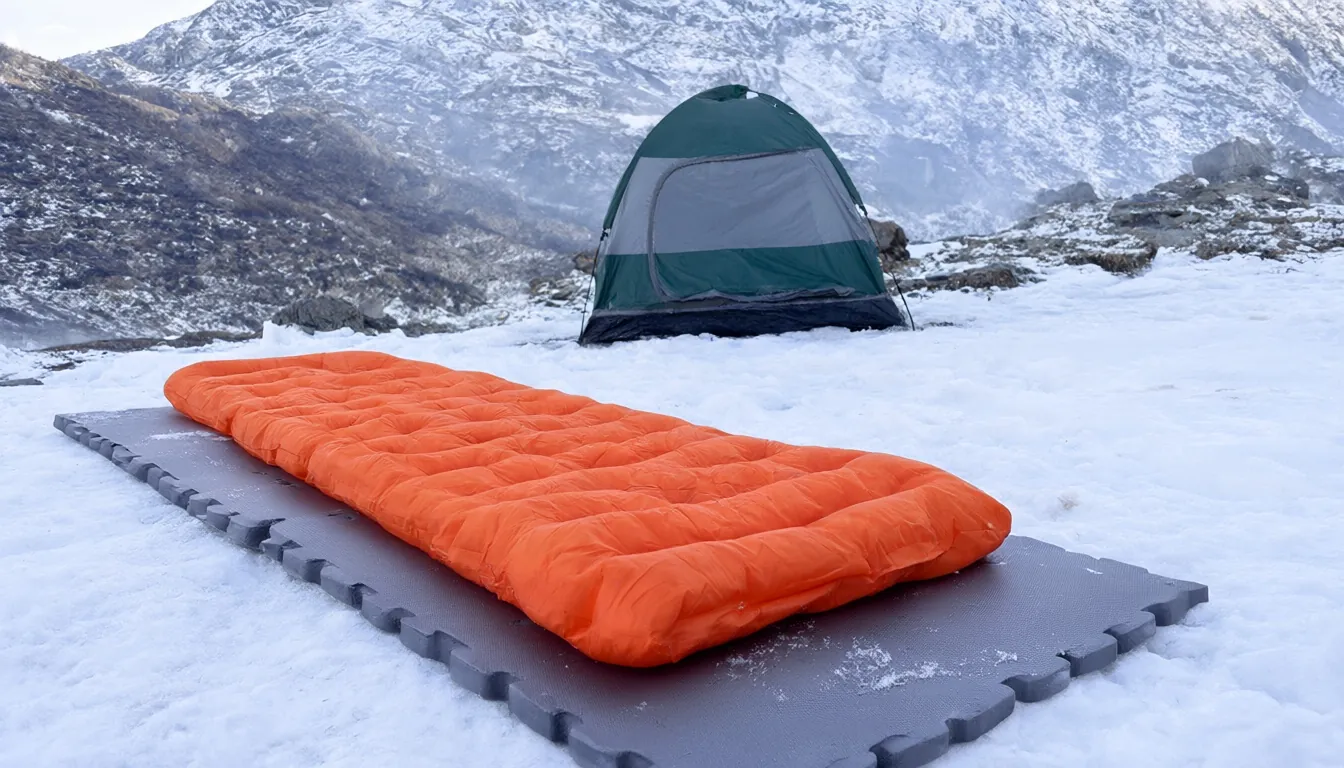
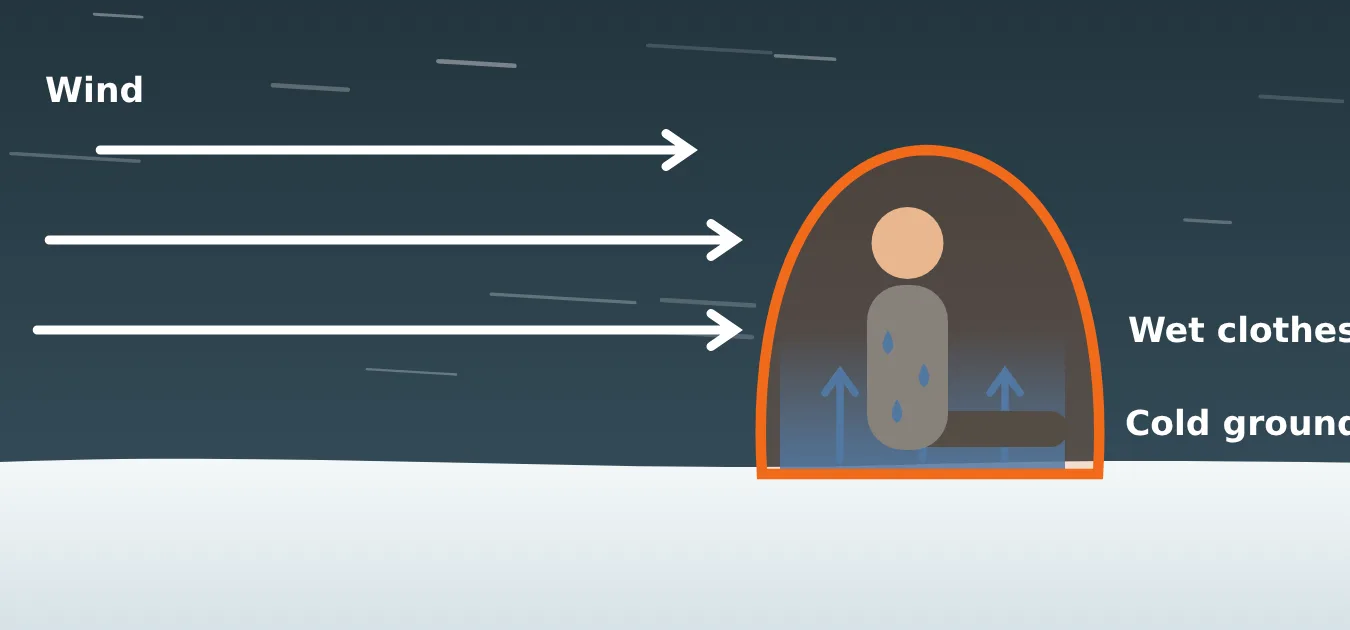
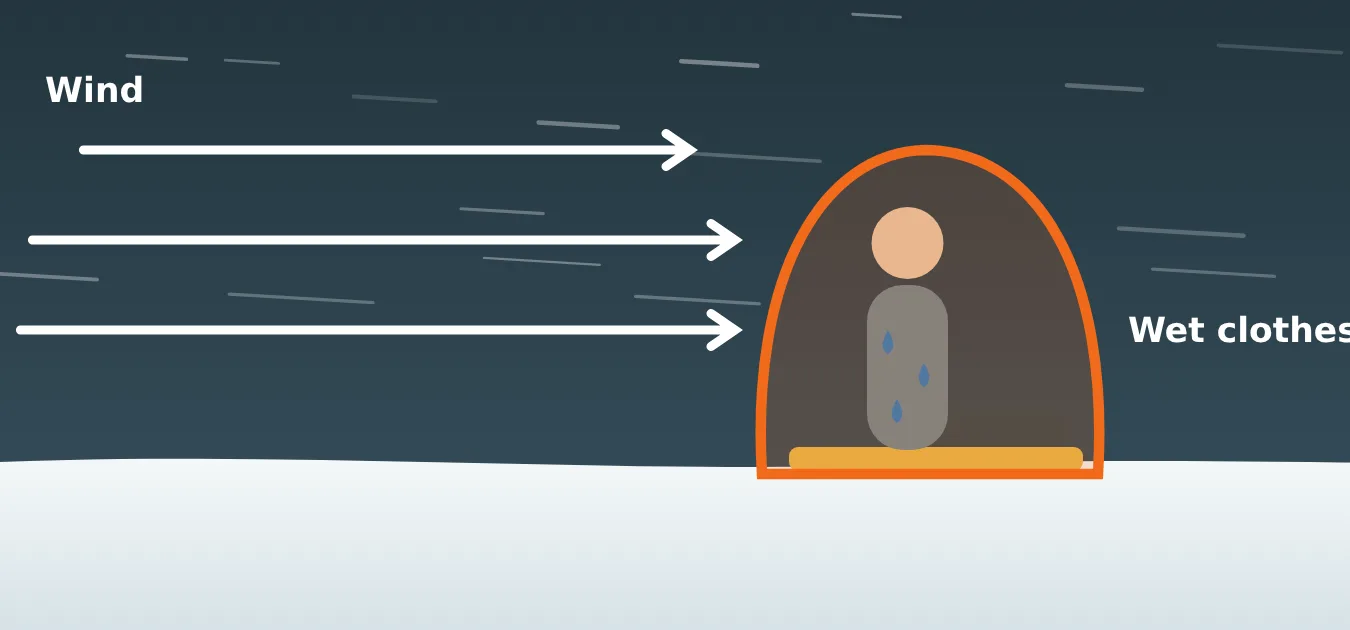
DNT is clear about the limit: a wind sack protects well against wind and weather, but it gets cold if you sit for a long time or spend the night in it. A sleeping bag and a sleeping pad protect better against the cold.
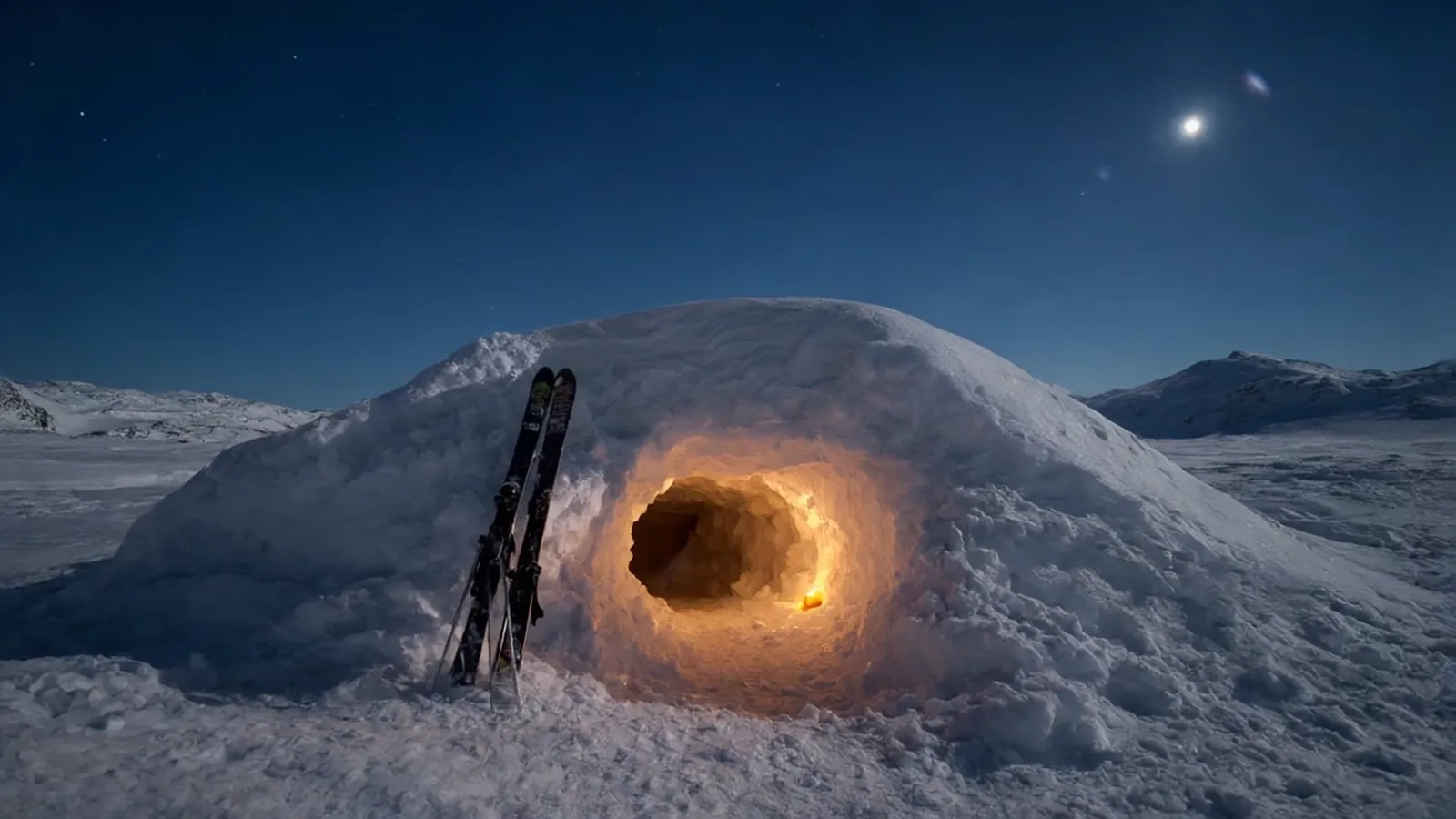
That is why the order in the pack matters. The wind sack stops the wind. The pad stops the ground. The sleeping bag keeps the warmth you have. And in winter, the shovel lets you dig into the snow when it is deep enough.
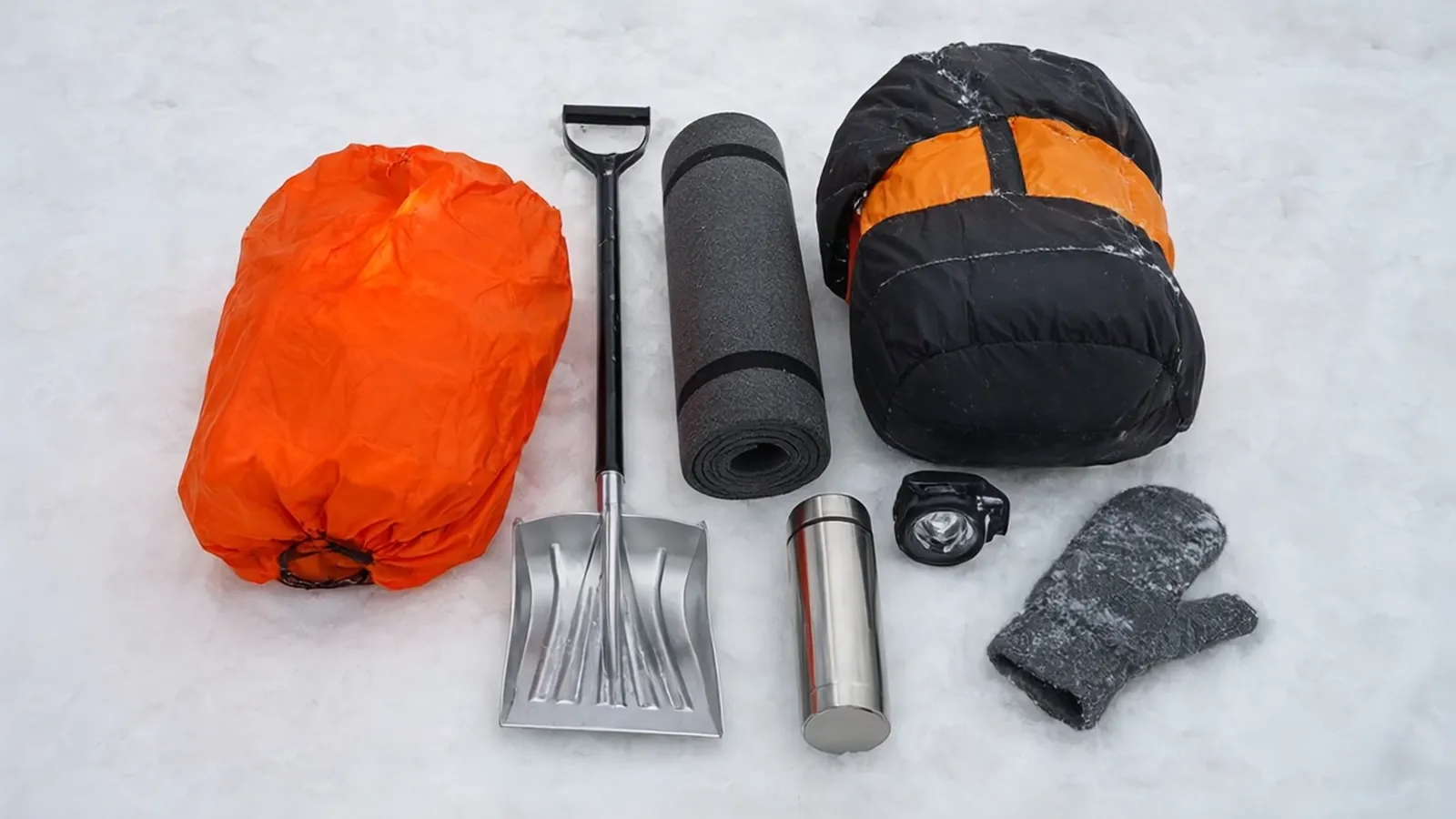
Signs of hypothermia to watch for in each other
- Shivering.
- Slurred speech.
- Clumsy movements.
- Tiredness and apathy. The person who is cold often does not notice it.
If you see these signs, shield the person from the wind, cover their head and get something between their body and the ground. If you cannot change wet clothes without making things colder, put dry clothes on top of the wet ones. Give warm drinks without alcohol. In Norway, call 113.
Make yourselves easy to find
Call early if you need help, while the phone has power and you know where you are. In Norway, 112 is the police emergency number, and the police lead rescue operations. 113 is for medical emergencies. Save the battery afterwards, and keep your headlamp ready.
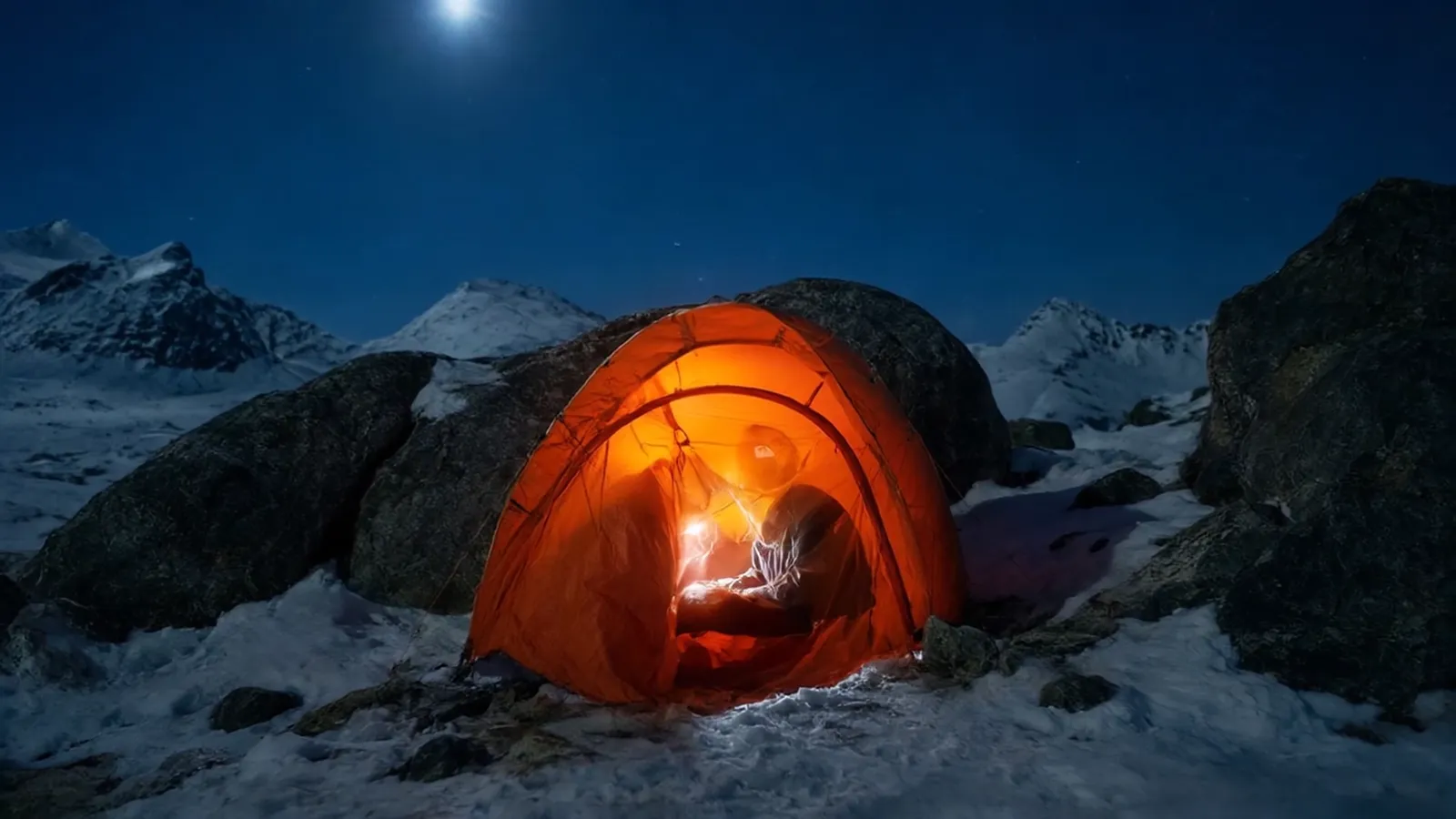
The morning after
A night out with the right gear is long, cold and boring. Without it, it can be dangerous. The difference weighs a few kilos and sits at the bottom of the pack on every trip where you might end up staying longer than planned.
Try the wind sack during a lunch break before you need it. Then you know how to get inside it when the wind is blowing.
Sources
- DNT: Husk vindsekk på fjelltur
- Røde Kors og DNT: Fjellvettreglene
- Norsk Helseinformatikk: Førstehjelp ved nedkjøling
- Dagbladet: Røde Kors om ventetid på redning
This article gives general advice and does not replace first-aid training or experience. Images and film are AI-generated and do not show a real event.